
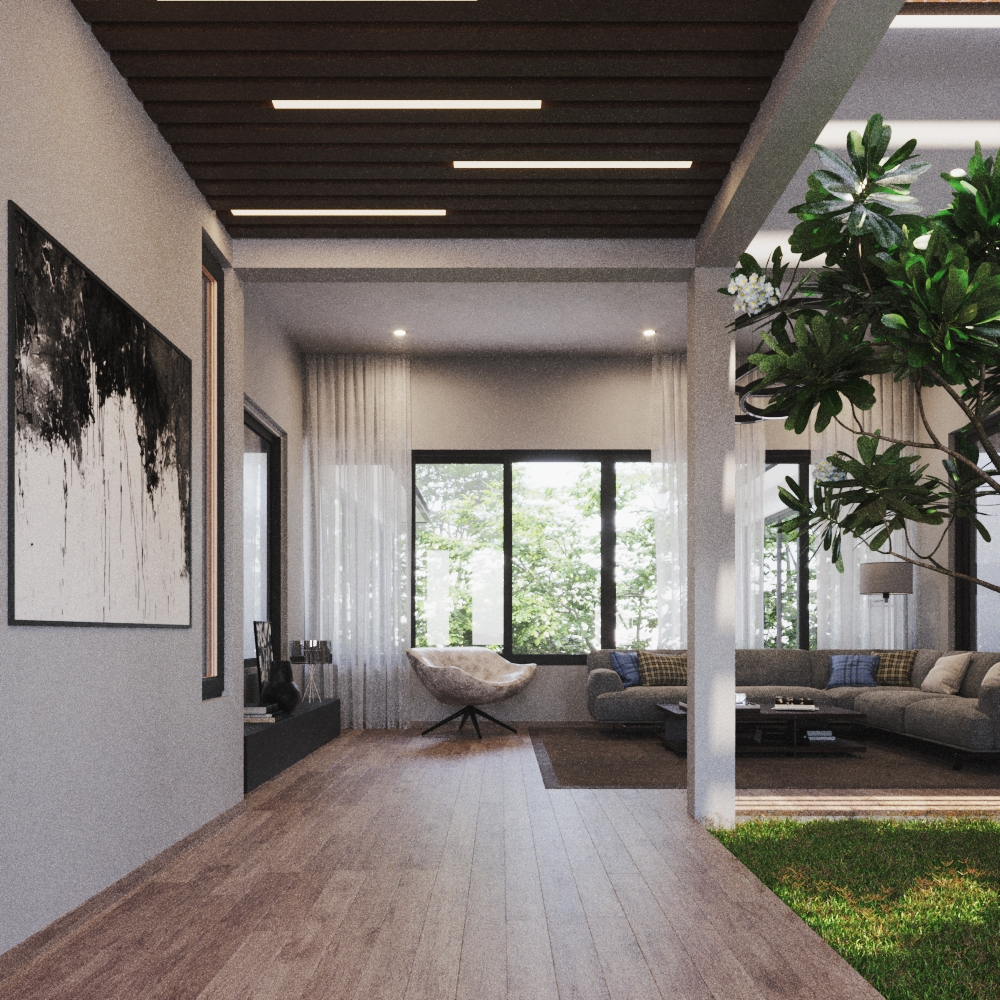
Why modern house designs often ignore Kerala’s climate and how better an architectural planning can solve it.

The Unexpected Reality After Moving In
You finally move into your newly built home. The exterior looks exactly as you imagined. The interiors are polished. Every finish feels carefully chosen.
But within a few weeks, something feels off.
The house is warmer than expected during the day. Certain rooms feel stuffy even with the windows open. Air doesn’t seem to move naturally through the space and no matter what you try, the discomfort persists.
This is a reality many homeowners across Kerala face after building a modern home. And more often than not, the root cause isn’t identified until the construction is complete and changes become expensive.
Designs That Ignore Kerala’s Climate
A significant part of the problem begins at the design stage.
Modern house designs that gain popularity online frequently originate from countries with vastly different climates — cooler, drier, or less humid environments where large glass facades and compact interiors make practical sense. When these designs are adapted without modification for Kerala’s context, the result is a home that looks contemporary but performs poorly in the local environment.
Kerala has a tropical climate defined by high humidity, intense sunlight, and seasonal monsoon winds. Homes built here must be specifically designed to respond to these conditions. Yet many houses being constructed today include:
- Large glass surfaces positioned to face direct sunlight throughout the day
- Poorly placed windows that fail to take advantage of prevailing wind directions
- Limited cross ventilation due to closed-off room layouts
- Compact floor plans that restrict the natural movement of air
These choices may appear visually appealing in architectural renders, but in real-world conditions, they trap heat inside the building envelope. The result is a home that relies heavily on air conditioning even during seasons when natural ventilation should be sufficient.
When Everyday Comfort Is Compromised
A home should be a place of rest and ease. When ventilation is inadequate, that standard becomes difficult to maintain — not just occasionally, but every single day.
Common complaints among homeowners in poorly ventilated homes include:
- Uncomfortably warm rooms during afternoon hours, particularly in west-facing spaces
- Kitchens that become oppressively hot during cooking
- Bedrooms that feel stuffy at night, disrupting sleep quality
- A general sense of heaviness or staleness in the air, especially in rooms with limited openings
Some homeowners eventually explore retrofitting solutions by adding windows, installing mechanical ventilation systems, or extending overhangs after construction. However, these modifications are significantly more expensive once the building is complete. Addressing ventilation problems after construction can cost several times more than resolving them during the design phase.
Why Climate-Responsive Architecture Matters
Good architecture is not solely about visual appeal. In regions like Kerala, where climate conditions are demanding for most of the year, a home’s design must actively work with the environment rather than against it.
Climate-responsive architecture considers how a building will perform across different seasons, times of day, and weather patterns. For Kerala, this means prioritising:
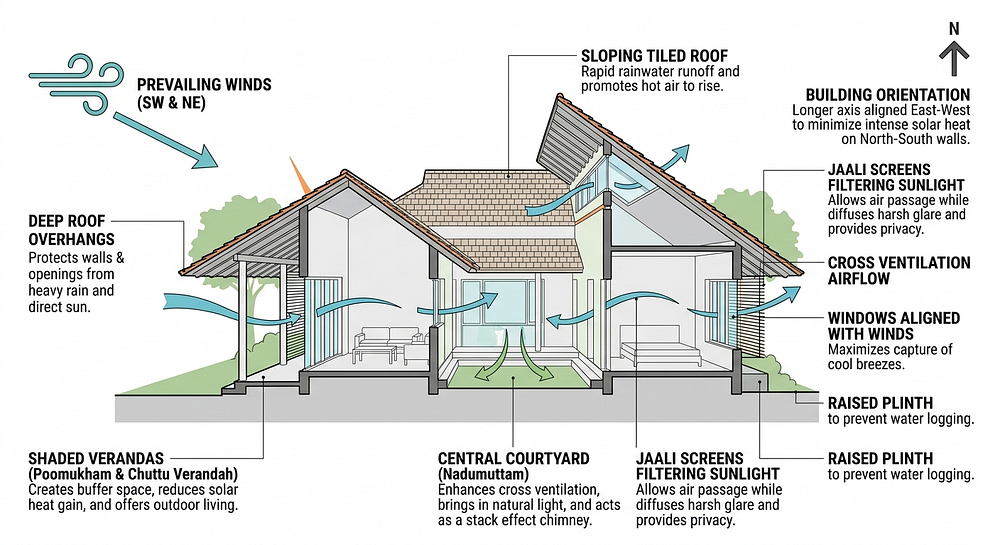
- Building orientation to minimise heat gain from the western sun while maximising shade during peak hours
- Cross ventilation that allows fresh air to enter, circulate, and exit naturally through thoughtful placement of openings
- Window placement and sizing based on the direction of prevailing winds, not just aesthetics
- Shading elements such as verandas, deep overhangs, jaali screens, and projecting balconies that filter sunlight before it enters the living space
These principles are not new. Traditional Kerala architecture with its sloping roofs, shaded courtyards, and deep eaves — embodied all of these strategies.
The Role of Professional Architectural Planning
This is where the value of an experienced architect becomes undeniable.
Professional architects who specialise in Kerala’s residential landscape understand how the local climate influences building comfort throughout the year. Rather than applying a standardised design template, a skilled architect will evaluate each project individually by analysing:
- The direction and intensity of sunlight across different times of day and seasons
- Local wind patterns specific to the site’s geographic location
- The dimensions, orientation, and topography of the plot
- The lifestyle and spatial requirements of the family
With this understanding, architects can create homes that remain naturally cooler and better ventilated by reducing the load on artificial cooling systems and improving long-term comfort and energy efficiency.
It is also worth noting that architecture and interior design must be planned in coordination. A well-ventilated structural layout can be undermined by heavy interior partitions, blocked ceiling openings, or furniture arrangements that obstruct airflow. The best results come from treating both disciplines as a unified process from the outset.

What a Well-Designed Home Feels Like
When ventilation and climate performance are genuinely prioritised during the design phase, the difference is evident from the first day of occupancy — not just during mild weather, but throughout the year.
Homeowners who move into climate-responsive homes consistently report:
- Rooms that feel noticeably cooler during the day without depending on air conditioning
- Bright, well-lit interiors that benefit from controlled natural light
- A sense of consistent airflow that keeps the air feeling fresh
- Reduced electricity consumption from lower air conditioning usage
- A general improvement in daily comfort and wellbeing
Expert Recommendations from Architects with 20+ Years of Experience
Based on designing residential and commercial projects across Kerala, seasoned architects consistently recommend the following principles when planning a new home:
1. Prioritise Cross Ventilation from the Start
Position windows, doors, and openings on opposing walls of each room to create a path for natural airflow. Even a modest breeze becomes effective when the layout supports it. Avoid designs where rooms have openings on only one side.
2. Control Direct Sunlight with Shading Elements
Sunlight is a significant source of heat gain in Kerala. Design the home with shading features — extended overhangs, louvered screens, deep balconies, or pergolas that intercept sunlight before it strikes glass or walls directly.
3. Use Glass Thoughtfully and Strategically
Large glass surfaces are a defining feature of many contemporary designs, but in Kerala’s climate, excessive glazing leads to substantial heat gain. Glass should be used purposefully, with attention to orientation, and supplemented with shading and appropriate glazing specifications where needed.
4. Integrate Architecture and Interior Design
Spatial planning and interior design must work together to support comfort. Open plan layouts, high ceilings, and strategically placed ventilators can all contribute to better airflow when coordinated with the structural design.
Practical Steps for Homeowners Before Construction Begins
If you are planning to build a home in Kerala, consider taking these steps before finalising your design:
- Engage with an experienced architecture firm in Kerala early in the process — ideally before the layout is drawn
- Discuss the site’s orientation and how sunlight and wind interact with it at different times of day and year
- Ask specifically about ventilation strategy and how the design addresses cross airflow in each room
- Review the placement of all openings in relation to prevailing wind direction and sun angles
- Ensure the design is developed for your specific plot rather than adapted from a generic template
These decisions, made at the planning stage, have a disproportionate impact on the comfort and livability of your home for the decades ahead.
Designing Homes That Work With Nature
A well-designed home in Kerala should do more than present an attractive facade. It should respond intelligently to the local climate — creating living spaces that remain comfortable, airy, and naturally lit throughout the year.
When architects give genuine attention to airflow, solar orientation, and spatial planning in the early design stages, the outcome is a home that stays cool and pleasant without excessive reliance on mechanical systems. These decisions may seem technical during the planning phase, but their effect on daily life is deeply tangible.
Every room that receives consistent natural ventilation, every afternoon that passes without turning on the air conditioner, and every morning that begins with cool, fresh air is a direct result of thoughtful architectural decisions made before a single brick was laid.
Final Thoughts
Modern architecture and everyday comfort are not in conflict. With the right balance of design excellence, climate awareness, and professional planning, homes in Kerala can achieve both a contemporary aesthetic and genuine, lasting livability.
Before finalising any house design, it is always worthwhile to work with architects who understand how regional climate shapes building performance — professionals who treat comfort as an architectural priority, not an afterthought.
When architecture responds to nature rather than ignoring it, the result is a home that feels right every day — not just the day you move in.
About the Architects
Team Arcon LLP is an architecture firm based in Kozhikode (Calicut) with over two decades of experience delivering residential and commercial projects across Kerala. The firm specialises in climate-responsive architecture, contemporary house design, and sustainable home planning — creating spaces that balance thoughtful aesthetics with genuine everyday comfort.
To learn more about the team behind Team Arcon LLP, visit their profile of experienced architects in Calicut who are dedicated to designing spaces that are both beautiful and built to last.
Frequently Asked Questions (FAQs)
- Why does my newly built home in Kerala feel so hot even with windows open?
Most newly built homes in Kerala feel hot because the design doesn’t account for the local climate. Common culprits include west-facing glass surfaces that absorb afternoon heat, windows placed without regard to wind direction, and compact layouts that prevent air from moving freely through the space. Opening windows helps only when the design allows cross ventilation and air needs a clear path to enter from one side and exit from the other.
2. Why is climate-responsive architecture important in Kerala?
Kerala’s climate is among the most demanding in India for residential design. High humidity, intense tropical sunlight, and consistently warm temperatures mean that a home built without climate awareness will almost always feel uncomfortable. Unlike cooler climates where passive design is optional, in Kerala it is essential. A poorly designed home forces occupants to depend on air conditioning for most of the year, significantly increasing electricity costs and reducing daily comfort. Beyond heat, inadequate ventilation raises indoor humidity levels, which affects air quality and can lead to dampness and deterioration over time. Simply put, climate-responsive architecture in Kerala is not a design preference — it is the difference between a home that feels livable every day and one that merely looks good from the outside.
3. Can a poorly ventilated home be fixed after construction?
Some improvements are possible after construction — adding windows, installing exhaust fans, or extending overhangs, but these are significantly more expensive and less effective than getting the design right from the start. Structural changes after construction can also affect the aesthetics and integrity of the building. Addressing ventilation during the design stage is always the more practical and cost-effective approach.
4. What design elements help keep homes cooler in Kerala?
Several elements work together to keep a home naturally cool in Kerala’s climate. Proper building orientation minimises heat gain by limiting large openings on the west side. Cross ventilation achieved by placing windows on opposite walls keeps fresh air moving through living spaces continuously. Deep overhangs, shaded verandas, and louvered screens block direct sunlight before it heats walls or glass. High ceilings allow warm air to rise away from occupied areas, while courtyards create natural airflow channels through the home. Material choices also matter — walls with good thermal mass absorb and release heat gradually, moderating indoor temperatures. When these elements are considered together during the design stage rather than treated as afterthoughts, the difference in daily comfort is substantial.
5. How much does poor ventilation cost a homeowner in the long run?
The financial impact of poor ventilation accumulates steadily over time. Higher air conditioning usage leads to significantly increased electricity bills month after month. In some cases, homeowners also spend on post-construction modifications that could have been avoided entirely. Beyond the financial cost, there is also the less quantifiable but very real cost of daily discomfort — disrupted sleep, an uncomfortable kitchen, and rooms that never feel truly pleasant to spend time in.
Conclusion
Modern homes in Kerala often prioritise visual appeal over everyday livability — but comfort and climate responsiveness should never be an afterthought. Proper orientation, shaded openings, and effective cross ventilation can dramatically improve how a home feels while reducing dependence on air conditioning year-round.
At Team Arcon, we believe great architecture never forces a choice between beauty and comfort. With over two decades of experience designing homes and commersial spaces across Kerala, we bring the expertise to create spaces that look stunning and feel just as good to live in.
Looking to build in Kerala the right way?
Get your free consultation today.
📞 9400000014